
Hot Work Fire Watch Guards for Welding, Cutting and Torch Work
Our hot work fire watch guards stand watch while your crews weld, cut, braze, grind or apply torch-down roofing, and they stay after the work ends to catch smoldering fires before they spread. Every guard is trained in NFPA 51B and OSHA hot work rules, carries a fire extinguisher on post, and logs the watch for your hot work permit.
What Is a Hot Work Fire Watch?
A hot work fire watch is a trained person whose only job is to watch for fires during and after hot work. Hot work means any work that makes flames, sparks or heat that can start a fire, including welding, cutting, brazing, soldering, grinding, thawing pipes with a torch and torch-applied roofing.
Sparks and molten slag can travel up to 35 feet and fall through cracks, floor openings and wall gaps into areas the welder cannot see. A dedicated fire watch sees what the operator cannot.
When Do You Need Fire Watch Personnel for Hot Work?
Welding, cutting, brazing, and grinding generate intense heat and sparks capable of igniting hidden fires hours after work stops. Under OSHA (29 CFR 1910.252) and NFPA 51B standards, businesses across the United States must deploy dedicated fire watch personnel for hot work whenever ignition risks cannot be completely eliminated.
You are legally required to staff certified fire watch guards during hot work operations when:
-
Combustibles Within 35 Feet: Flammable materials, wooden structures, or debris sit within 35 feet of the work zone and cannot be relocated.
-
Spark Travel Risks: Sparks, slag, or heat can pass through floor openings, wall cracks, ductwork, or conduct through metal partitions to adjacent rooms.
-
Impaired Fire Systems: Building sprinklers, fire alarms, or suppression systems are offline during construction, shutdowns, or repairs.
Fire watch personnel must monitor the site continuously during operations and remain on-site for at least 30 to 60 minutes after hot work ends to detect smoldering hazards.
Protect your job site, avoid costly OSHA fines, and maintain strict municipal compliance. Fire Watch Guards dispatches licensed, rapid-response fire watch security nationwide across all 50 states. Contact Fire Watch Guards or call (844) 254-8273 for immediate 24/7 deployment.
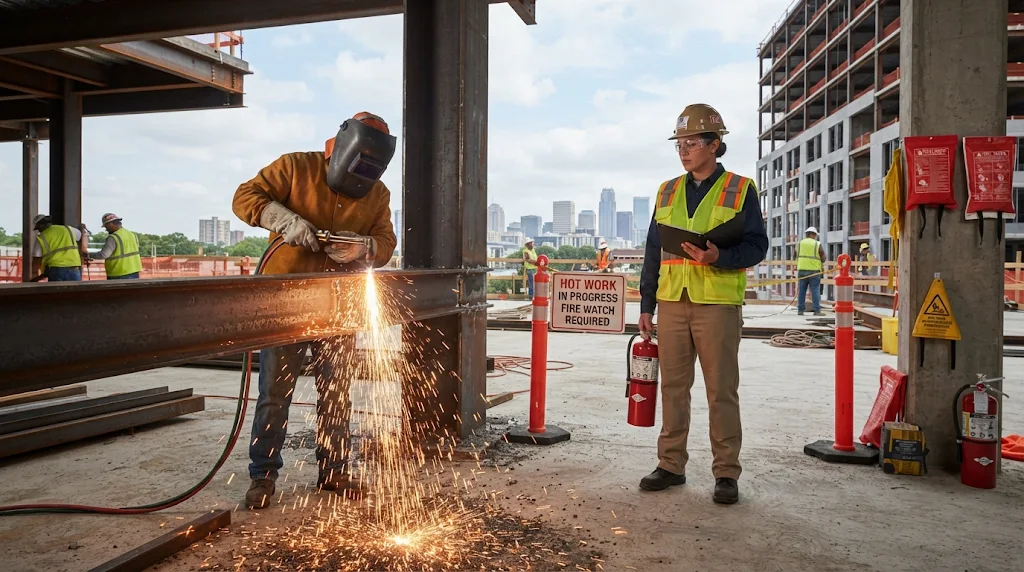
NFPA 51B Fire Watch Requirements
NFPA 51B, Standard for Fire Prevention During Welding, Cutting, and Other Hot Work, is the main standard for hot work fire watch. The key NFPA 51B fire watch requirements are:
| Requirement | NFPA 51B (2019 and later) | OSHA 1910.252 |
|---|---|---|
| Fire watch during hot work | Required when combustibles are within 35 ft or other hazards exist | Required under the same conditions |
| Fire watch after hot work ends | At least 1 hour | At least 30 minutes |
| Extra monitoring after the fire watch | Up to 3 more hours, as set by the PAI | Not specified |
| Extinguisher on post | Required, suitable for the hazard | Required |
| Training | Trained in extinguisher use and sounding the alarm | Trained in extinguisher use and alarm |
| Authority to stop work | Yes, if unsafe conditions develop | Implied by duties |
Older editions of NFPA 51B used a 30-minute post-work watch. Fire codes and hot work permits that follow newer NFPA 51B editions use the 1-hour rule, and some projects require 2 hours after torch-applied roofing. Always follow the longest time on your hot work permit.
What Our Hot Work Fire Watch Guards Do
Welding, cutting, brazing, and grinding create intense heat and flying sparks that can ignite hidden fires inside wall cavities, floors, or ductwork. Fire Watch Guards deploys trained hot work fire watch personnel across all 50 states to protect commercial sites, contractors, and property managers from devastating fire damage and costly municipal shutdowns.
Pre-Work Hazard Inspection & Permit Verification
Before any spark is struck, our guards inspect the work zone to verify active hot work permits, confirm a 35-foot clearance of combustible materials, clear emergency exit routes, and stage fully charged fire extinguishers nearby.
Continuous Monitoring & Post-Work Fire Patrols
During active operations, our dedicated guards maintain an unbroken line of sight on sparks, slag, and adjacent rooms to extinguish incipient flames immediately or trigger emergency evacuations. Once work stops, our team remains on-site for 30 to 60 minutes—or longer per local fire marshal mandates—conducting documented patrols to catch hidden, smoldering embers.
Protect your crew, property, and local compliance record. Contact Fire Watch Guards or call (844) 254-8273 for rapid 24/7 dispatch anywhere in the USA.
Welding Fire Watch for Every Setting
Our welding fire watch and fire watch security for hot work covers:
Construction Sites
Structural steel, rebar and MEP work.
Roofing
Torch-applied modified bitumen systems.
Occupied Commercial Buildings
Hot work near tenants, stock or finishes.
Warehouses & Plants
High-piled storage and dust hazards.
Hospitals, Schools & Campuses
Strict hot work permit programs.
Restaurants & Kitchens
Hood, duct and equipment repairs.
Pipeline, Plant & Shutdown Work
Where a dedicated fire watch is part of the permit.
Fire Watch Welding Rules in Major Cities
- New York City: fire guards for torch operations on construction sites, rooftops and citywide torch permits must hold an FDNY F-60 Certificate of Fitness.
- California: Cal/OSHA Title 8 Section 4848 requires a hot work fire prevention procedure based on ANSI Z49.1 and NFPA 51B.
- Texas and most other states: OSHA rules plus the local fire code, often based on the International Fire Code.
Why Hire Hot Work Fire Watch Guards?
Using a crew member as the fire watch can work on small jobs, but it pulls a skilled worker off the job, and a busy worker may walk away before the watch ends. Hiring hot work fire watch guards means:
- Your crew keeps working while a trained guard handles the fire watch
- The full post-work watch is always completed and logged
- Your permit paperwork is clean for the PAI, fire marshal and insurer
- Your insurer sees a professional program, which matters for builder's risk and property policies
Hot Work Fire Watch Cost
In 2026, hot work fire watch typically costs $30 to $48 per guard per hour for planned work, with a minimum shift of about 4 hours. A common job is one guard for an 8-hour welding shift plus the 1-hour post-work watch. See the fire watch cost guide for city pricing, or browse all our fire watch services.
Hot Work Fire Watch FAQ
A hot work fire watch watches for fires during and after welding, cutting, brazing and other hot work. They check the area before work, keep an extinguisher ready, can stop unsafe work, stay for the full post-work watch, and sound the alarm if a fire starts.
OSHA 29 CFR 1910.252 requires at least 30 minutes. NFPA 51B (2019 and later editions) requires at least 1 hour, plus up to 3 more hours of monitoring if the permit authorizing individual requires it. Follow the longest time on your permit.
NFPA 51B requires a fire watch when combustibles are within 35 feet of hot work or other fire hazards exist. The fire watch must be trained, have a suitable extinguisher, be able to sound the alarm, have authority to stop work, and stay at least 1 hour after hot work ends.
No. The fire watch must be a separate person who is not doing the hot work, so they can watch the whole area, including spots the operator cannot see.
Yes, when welding or cutting is done where more than a minor fire could develop, or near combustibles within 35 feet. OSHA 1910.252 covers general industry and OSHA 1926.352 covers construction.
They must be trained in fire extinguisher use, fire hazards and alarm procedures. Some cities require more, such as the FDNY F-60 Certificate of Fitness for torch operations in New York City.
Sometimes, if all the hot work is close together and fully visible from one spot. If welders are in different rooms, floors or areas, each area usually needs its own fire watch.
Last updated: October 2026. Code references: NFPA 51B, OSHA 29 CFR 1910.252 and 1926.352, International Fire Code Chapter 35, FDNY F-60, Cal/OSHA Title 8 Section 4848. Confirm requirements with your permit authorizing individual and local fire code official.
Book Hot Work Fire Watch Guards
Keep your welding, cutting and roofing work moving with trained fire watch personnel for hot work.