
Fire Watch Patrol & Roving Fire Watch Services
When your fire alarm or sprinkler system is out of service, someone has to do the job those systems normally do: watch for fire and raise the alarm fast. A fire watch patrol fills that gap. Fire Watch Guards provides trained guards who walk your property on a set schedule, check for fire hazards, keep detailed logs, and call for help the moment something is wrong.
Whether you need one guard on a single floor or a roving fire watch covering a large campus, we build a patrol plan that meets your fire marshal’s requirements and keeps your building open.
What Is a Fire Watch Patrol?
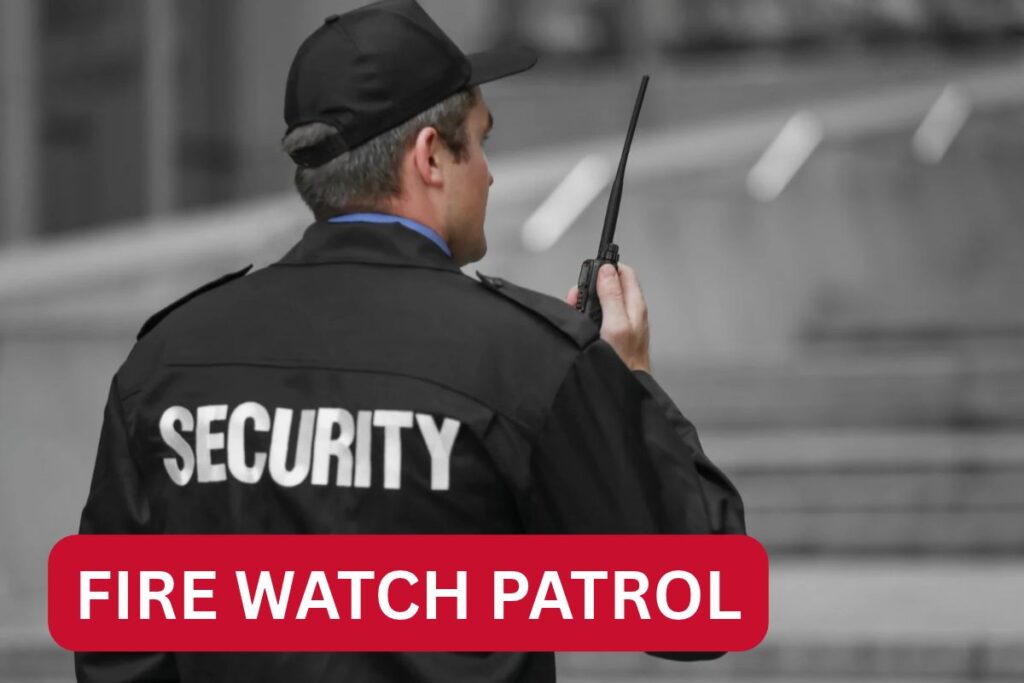
A fire watch patrol is a dedicated guard (or team of guards) assigned to continuously patrol a building or site to detect fire, smoke, and fire hazards while fire protection systems are impaired or while high-risk work is underway. Patrol guards have no other duties that distract from fire safety. Their job is to find problems early, alert the fire department, and help people get out safely.
What Is a Roving Fire Watch?
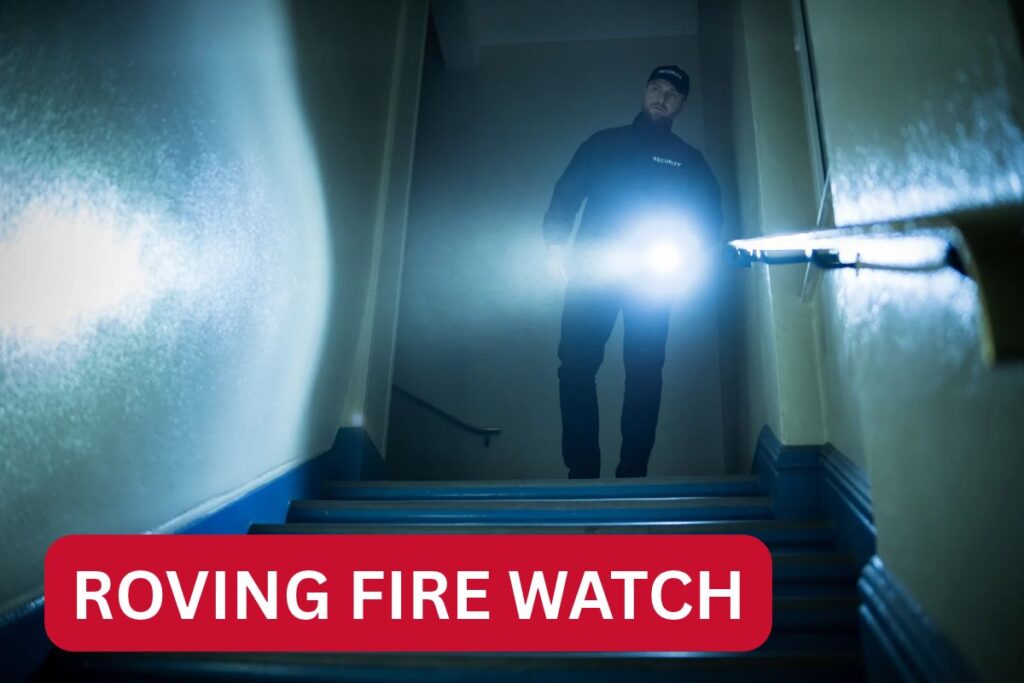
A roving fire watch is a patrol-based fire watch where guards move through every assigned area on a repeating route instead of standing at one post. Roving patrols are the most common type of fire watch for:
- Multi-floor buildings, apartments, and hotels
- Warehouses and industrial facilities
- Construction sites and renovation projects
- Shopping centers, office buildings, and campuses
For smaller areas or specific hot work, a stationary fire watch may be enough. For anything larger, a roving patrol is usually required to cover the whole space.
IFC Fire Watch Patrol Frequency
One of the most common questions we get is about IFC fire watch patrol frequency: how often does a fire watch guard need to patrol?
The International Fire Code (IFC) requires building owners to notify the fire code official and either evacuate the building or provide an approved fire watch when a required fire protection system is out of service. Under IFC Section 901.7, this typically applies when:
- A sprinkler system is impaired for more than 10 hours in a 24-hour period
- A fire alarm system is impaired for more than 4 hours in a 24-hour period
The IFC itself does not set one fixed patrol interval for every building. Instead, the fire code official (also called the Authority Having Jurisdiction, or AHJ) decides how often patrols must happen based on the building’s size, use, occupancy, and risk. In practice, most jurisdictions require patrols every 15 to 60 minutes, with 30 minutes being very common. High-risk occupancies such as hospitals, hotels, and high-rises are often held to shorter intervals.
Always confirm the required frequency with your local fire marshal. Our team can help you understand what your AHJ expects and staff your patrol to match.
What Our Fire Watch Patrol Guards Do
- Walk every assigned area on the required schedule, including stairwells, mechanical rooms, storage areas, and parking structures
- Look and smell for smoke, fire, heat, and electrical hazards
- Check that exits, corridors, and fire doors are clear and working
- Confirm fire extinguishers are in place and accessible
- Record every round in a time-stamped fire watch log
- Call 911 and notify management immediately if a fire is found
- Help occupants evacuate safely and meet the fire department on arrival
Fire Watch Logs and Documentation
Every patrol is documented. Our logs record the time of each round, areas checked, hazards found, and any actions taken. These records are ready for fire marshal inspections and insurance reviews, and they protect you if questions come up later.
When You Need a Fire Watch Patrol
- Fire alarm or sprinkler system outages, repairs, or upgrades
- Fire panel failures or power outages
- Hot work such as welding, cutting, or roofing
- Construction, renovation, and tenant improvements
- Large events and high-occupancy situations
- When the fire marshal or your insurer orders a fire watch
Why Choose Fire Watch Guards
- Trained, licensed guards focused only on fire safety during their shift
- Fast deployment, often the same day
- 24/7 coverage, including nights, weekends, and holidays
- Patrol plans built around your AHJ’s requirements
- Clear, inspection-ready logs for every shift
Fire Watch Patrol FAQ
Your local fire code official sets the frequency. Most require patrols every 15 to 60 minutes, and 30 minutes is common.
A roving fire watch moves through all assigned areas on a repeating route. A stationary fire watch stays at one location, such as next to a hot work area.
It depends on the size and layout of your property and the required patrol interval. Each guard must be able to complete the full route within that interval. We’ll assess your site and recommend the right number.
In most cases, yes. An approved fire watch allows the building to stay occupied while fire protection systems are repaired.
Schedule a Fire Watch Patrol Today
Keep your building safe and compliant with a professional fire watch patrol. Contact Fire Watch Guards today for fast, reliable roving fire watch coverage and a free quote.