
Construction Fire Watch: Trained Guards for Every Phase of Your Build
Our construction fire watch guards protect your project during hot work, after crews go home, and whenever fire protection on site is not yet working. We help general contractors, owners and safety managers meet NFPA 241, OSHA and fire code requirements, keep the builder’s risk insurer satisfied, and keep the project on schedule.
Why Construction Sites Need a Fire Watch
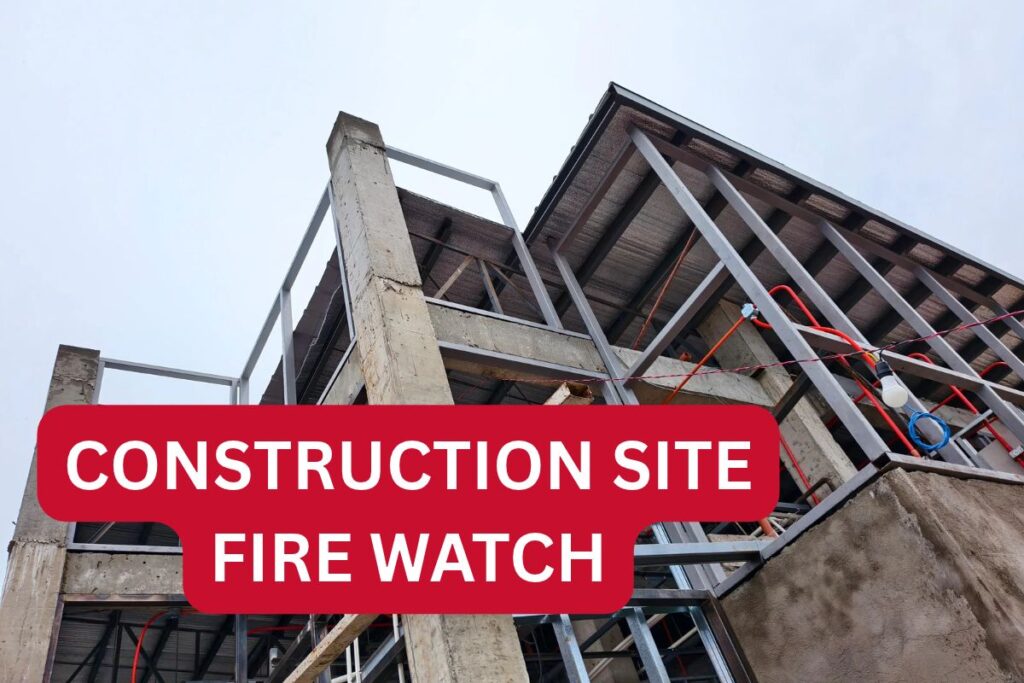
Buildings under construction are more exposed to fire than finished buildings. Sprinklers, fire alarms and fire walls are often not installed or not yet working. Combustible materials such as lumber, packaging, insulation and fuel are everywhere. Hot work, temporary heaters and temporary wiring add ignition sources, and empty sites at night are open to trespassers.
A construction site fire watch closes that gap. A trained guard patrols the site, spots hazards early and gets the fire department moving fast if a fire starts, while it is still small.
When Is a Construction Fire Watch Required?
Fire watch construction requirements come from several codes at once. Here are the most common:
| Situation | Rule | What it requires |
|---|---|---|
| Construction over 40 ft tall, or new multistory construction over 50,000 sq ft per story | International Fire Code Chapter 33 (2025 California Building Code Section 3314.1) | Fire watch during nonworking hours |
| Hot work (welding, cutting, grinding, brazing) | OSHA 29 CFR 1926.352 and 1910.252, NFPA 51B | Fire watch during work and at least 30 to 60 minutes after |
| Torch-applied roofing | Local fire codes (for example, Massachusetts 527 CMR) | Extended fire watch, often 2 hours after work |
| Large wood-frame and tall mass timber buildings | NFPA 241 (2022) | Enhanced fire safety and 2-hour fire watch after hot work |
| Fire protection impaired or not yet in service | IFC 901.7, AHJ | Fire watch until systems are working |
| Fire code official order | Local AHJ | As directed |
NFPA 241 also requires the owner to name a fire prevention program manager who is responsible for the site fire safety plan, including hot work permits and fire watch. Our guards work alongside that person and your site superintendent.
Hot Work Fire Watch on Construction Sites
Hot work is one of the leading causes of construction fires. OSHA 29 CFR 1926.352(e) requires a fire watch whenever welding or cutting is done where more than a minor fire could develop. NFPA 51B (2019 and later editions) requires the fire watch to continue for at least 1 hour after hot work ends, plus further monitoring for up to 3 hours if the permit authorizing individual requires it.
Workers on construction and welding forums say it plainly: the fire watch has the last word on hot work, and a fire watch who walks away defeats the purpose. Our construction site fire watch guards stay at the hot work area, keep an extinguisher ready, check for sparks on lower levels and behind walls, and only leave when the watch period is complete and logged.
What Our Construction Site Fire Watch Guards Do
- Patrol the full site on a set schedule during nights, weekends and holidays
- Watch hot work during the work and through the required cool-down period
- Check for hazards such as smoldering debris, temporary heaters, damaged temporary wiring, fuel storage and blocked fire lanes
- Keep fire department access clear, including fire lanes, hydrants and standpipe connections
- Report unsafe conditions to your site contact
- Keep a written fire watch log of every round, ready for the fire marshal, AHJ, OSHA or your builder’s risk insurer
- Call 911 and guide firefighters to the fire location if needed
Construction Site Fire Watch Services for Every Project Type
Our construction site fire watch services cover:
- High-rise and mid-rise construction, including podium and wood-frame residential
- Mass timber projects that need enhanced fire safety during construction
- Commercial tenant improvements inside occupied buildings, where existing sprinklers or alarms are impaired
- Industrial, warehouse and data center builds
- Renovation and demolition projects
- Roofing projects using torch-applied systems
- Public and school projects with strict fire safety plans
Fire Watch for Construction Sites: Planning Your Coverage
- Review your fire safety plan and permits. Check NFPA 241, hot work permits and any fire marshal conditions.
- Map high-risk phases. Framing, roofing and hot-work-heavy phases usually need the most coverage.
- Set coverage hours. Nightly and weekend fire watch, hot work posts, or full 24/7 coverage.
- Confirm guard count and patrol frequency with your AHJ and insurer.
- Schedule with us. We assign trained guards and start logs on the first shift.
Why General Contractors Choose Our Construction Fire Watch
- 24/7 dispatch for planned shifts and same-day hot work or impairment calls
- Guards trained in construction hazards, hot work, extinguishers and emergency notification
- Fire-watch-only focus on post
- Clear logs that satisfy fire marshals, OSHA and builder’s risk insurers
- Flexible scheduling that changes with your project phases
- Clear 2026 pricing. See fire watch cost
We provide construction fire watch in Los Angeles, Houston, Dallas, New York, Atlanta, Phoenix and other major markets. See all fire watch services.
Construction Fire Watch FAQ
What is a construction fire watch?
It is a trained person or team that patrols a construction site to find and report fires and fire hazards. It is used during hot work, during nonworking hours on large projects, and whenever fire protection on site is not working.
When is a fire watch required on a construction site?
Under the International Fire Code and the 2025 California Building Code, a fire watch is required during nonworking hours for construction over 40 feet tall or new multistory construction over 50,000 square feet per story. OSHA and NFPA 51B also require a fire watch during and after hot work. Your fire code official can require more.
How long must a fire watch stay after hot work?
OSHA requires at least 30 minutes after hot work ends. NFPA 51B (2019 and later) requires at least 1 hour, with up to 3 more hours of monitoring if the permit requires it. Some local codes require 2 hours after torch-applied roofing, and NFPA 241 (2022) sets 2-hour fire watches on large wood-frame and tall mass timber projects.
Can a worker on the crew act as the fire watch?
Sometimes, if they are trained and have no other duties during the watch. Many contractors hire construction site fire watch guards so crews can keep working and the fire watch is never pulled away.
Do fire watch guards on construction sites need training?
Yes. Fire watch personnel must be trained to use fire extinguishers, recognize fire hazards and sound the alarm. Some cities require specific credentials, such as the FDNY Fire Guard Certificate of Fitness in New York City.
Is fire watch needed on construction sites at night and on weekends?
On large projects, yes. The fire code requires fire watch during nonworking hours for buildings over 40 feet tall or with more than 50,000 square feet per story. Many owners and insurers require it on smaller projects too.
How much does a construction fire watch cost?
In 2026, planned fire watch for construction sites typically costs $30 to $48 per guard per hour, with discounts often available for long-term nightly coverage. See our fire watch cost guide for details.
Get a Construction Fire Watch Quote
Protect your project, your schedule and your neighbors with trained construction site fire watch guards. Call (844) 254-8273 or request a quote.
Last updated: October 2026. Code references: 2024 International Fire Code Chapter 33 and Section 901.7, 2025 California Building Code Section 3314.1 (effective January 1, 2026), OSHA 29 CFR 1926.352 and 1910.252, NFPA 51B, NFPA 241 (2022). Confirm requirements with your local fire code official.